
The Growing Fear of Automation
With the rapid rise of advanced artificial intelligence tools like ChatGPT, Claude, and automated coding assistants, many absolute beginners are asking a serious question: Is it still safe to become a data analyst in 2026? It is easy to look at AI software that writes code or builds instant graphs and assume human analysts are no longer needed.
If you are planning to enter the tech scene in local commercial hubs like HITEC City or Gachibowli, this uncertainty can make you hesitate. However, if you look closely at current corporate hiring patterns, the reality is completely different.
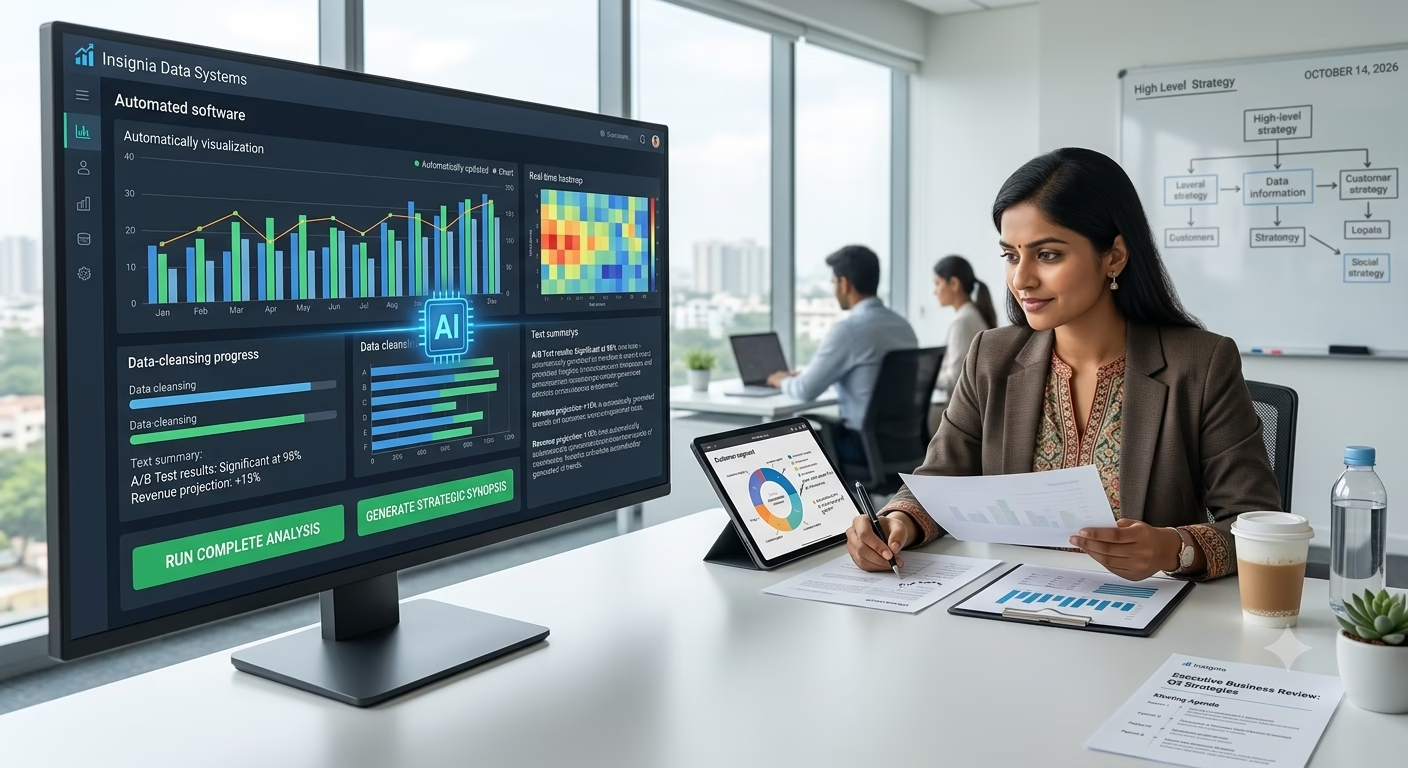
Companies are not using artificial intelligence to get rid of human analysts. Instead, they are hunting for professionals who know how to use AI to work twice as fast. Enrolling in a forward-thinking data analyst course in hyderabad will teach you how to treat AI as a powerful assistant rather than a competitor.
Why AI Cannot Replace a Human Analyst
Artificial intelligence is amazing at calculating math quickly, but it lacks the critical human traits that corporate businesses need to survive. Here are three reasons why human analysts remain irreplaceable.
1. The “Trust but Verify” Requirement
AI models are highly complex, but they are far from perfect. They frequently make logical mistakes, misinterpret vague columns, or generate false information that looks entirely believable.
Companies cannot risk making million-dollar decisions based on unverified code. Businesses need human analysts who understand database structures deeply enough to audit AI outputs and ensure all mathematical metrics are completely accurate.
2. Understanding Business Context and Nuance
An AI tool can read a table of numbers, but it does not understand your specific company culture, local market conditions, or human competitors. It does not know why a sudden seasonal monsoon in Telangana delayed your supply chain, or why local consumer habits shift during major regional holidays. A human analyst bridges the gap between raw numbers and real-world context.
3. High-Impact Communication and Persuasion
Hiring managers often say that communication beats raw technical skill every single day. AI can generate a chart, but it cannot stand up in a boardroom of corporate executives to explain why a business strategy needs to change. Your ability to look a stakeholder in the eye, answer unexpected questions, and tell an engaging story with data is something software simply cannot replicate.
The Shift to the “Augmented Analyst”
The data professionals who face risk are not those competing with AI—they are the traditional analysts who refuse to learn how to use it. The industry has entered the era of the Augmented Analyst. This term refers to a professional who uses smart technology to handle boring, repetitive coding syntax so they can spend their day focusing entirely on high-level business strategy.
AI handles the data collection and cleaning → You handle the strategy and decisions.
Instead of spending four hours writing basic boilerplate queries by hand, you can use prompt automation to build the foundation in seconds. This leaves you with more time to discover hidden profit trends and help your managers make smarter executive moves.
Future-Proof Your Technical Skill Set Today
The data analytics market is expanding rapidly, with global demand projected to hit massive record numbers through the late 2020s. The career path is secure, but the expectations are higher. Companies want well-rounded problem solvers who combine strong data foundations with sharp business logic.
If you want to master this modern, tech-forward way of working, focus on an education that teaches both traditional databases and modern workflow tools. Joining a practical data analyst course in hyderabad ensures you build an industry-ready portfolio that proves your strategic value to local employers.